
Journal of Naval Architecture and Marine Technology is the scientific, peer-reviewed, open-access journal of Turkish Chamber of Naval Architects and Marine Engineers. The entire submission process for an article is completed online through a descriptive online submission system via the following website: https://jnamt.manuscriptmanager.net/
Reviewers can also access their personal pages with their passwords through the same address.
Articles that comply with the main rules of the journal are sent to at least two external reviewers, and their opinions on the publishability of the article are requested. The reviewed articles are then re-evaluated by the Editor-in-Chief and the Editorial Board, and a decision to reject or accept is formed.
If any reviewer has a conflict of interest, they must inform the editor before accepting to review the submission.
Journal of Naval Architecture and Marine Technology is committed to the highest standards of research and publication ethics. When editors suspect any ethical misconduct, they will act in accordance with the relevant international publication ethics guidelines, such as the COPE guidelines, CSE's White Paper on Publication Ethics, and ORI. The editorial board of the journal encourages reviewers to comment on possible research or publication ethics violations, such as unethical research design, duplication, plagiarism, and similar issues. Plagiarism is one of the most common ethical issues related to academic writing and is a serious problem. Journal of Naval Architecture and Marine Technology does not tolerate any form of plagiarism. As per journal policy, submitted articles are screened for similarity at least twice during the review process and after acceptance, using similarity detection software such as iThenticate and others. If reviewers suspect plagiarism, editors may provide them with information obtained from plagiarism detection tools.
Journal of Naval Architecture and Marine Technology requires reviewers to keep articles confidential. The material of the article should not be used or shared in any way until it is published. In cases of suspected reviewer misconduct, Journal of Naval Architecture and Marine Technology follows the COPE flowchart. Please refer to the COPE ethical guidelines for reviewers for the 'Basic Principles Reviewers Should Adhere To' and 'Expectations from Reviewers.'
Reviewers are expected to check whether the articles comply with the SAGER guidelines and to encourage authors in this regard. Authors should carefully use the terms sex, referring to biological characteristics, and gender, shaped by social and cultural conditions, to avoid confusing the two. Article titles and/or abstracts should clearly state which sex(es) the study applies to. Authors should also identify whether sex and/or gender differences were anticipated, report how sex and/or gender were considered in the study design, provide sex- and/or gender-disaggregated data where appropriate, and discuss relevant outcomes.
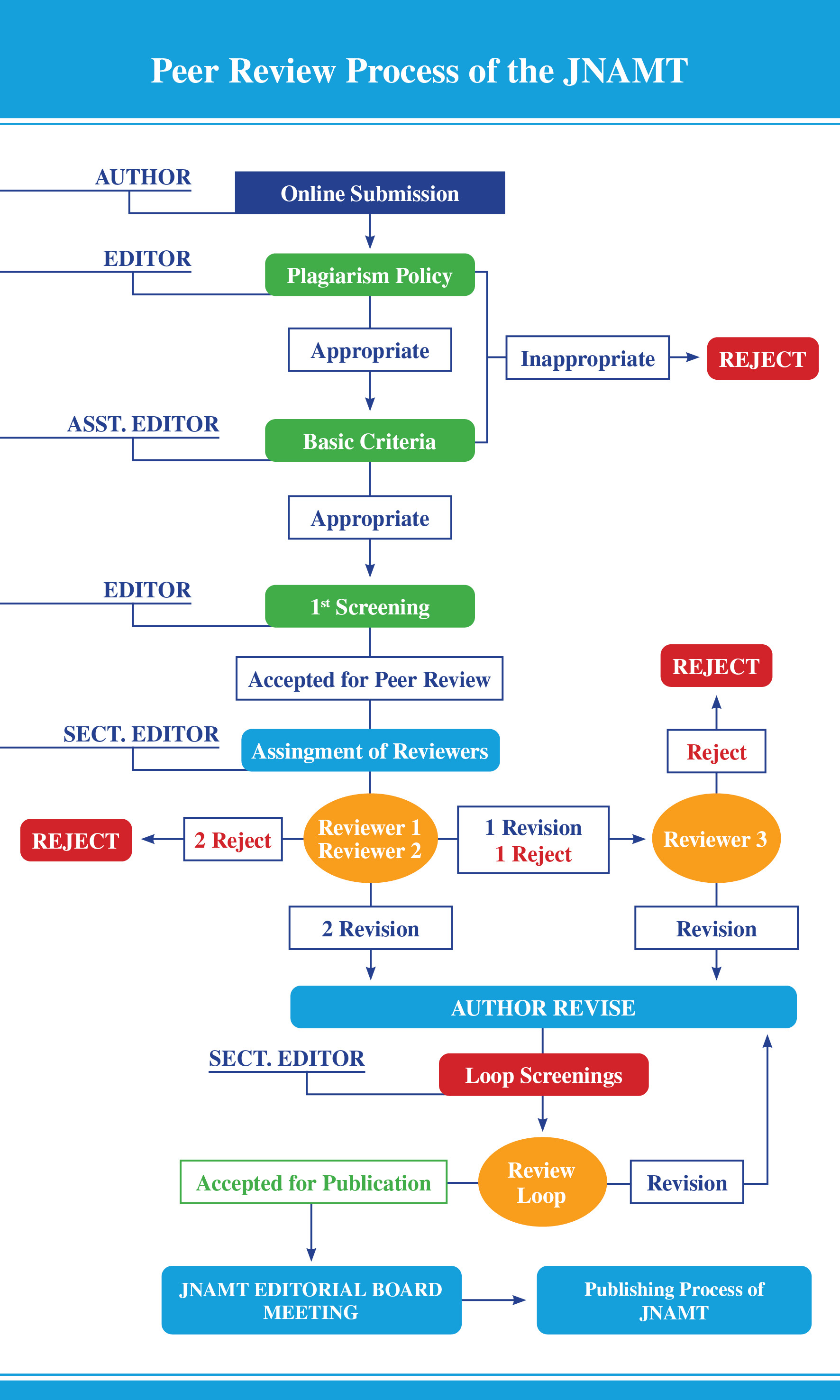
Reviewers can refer to the 'Instructions for Authors' page if needed. They can also use the following questions when evaluating articles:
Do you have any conflicts of interest related to the evaluation of this article? (If not applicable, please state 'none.')
Do you suspect any research or publication ethics violations? If yes, please provide details.
Does the article contain new and significant information that justifies its publication?
Is the title appropriate?
Does the abstract clearly and accurately describe the content of the article?
Is the problem stated clearly and concisely?
Are the methods comprehensively explained?
Is the results section clear and satisfactory?
Are the interpretations and conclusions justified by the results obtained?
Are sufficient and up-to-date references provided to other studies in the field?
Is the language at an acceptable level?
Please assess the publication priority of this article (1 is the highest priority, 10 is the lowest priority).
Is appropriate terminology used in the text?
Are the figures and/or tables adequate?
Is it necessary to shorten the article?